

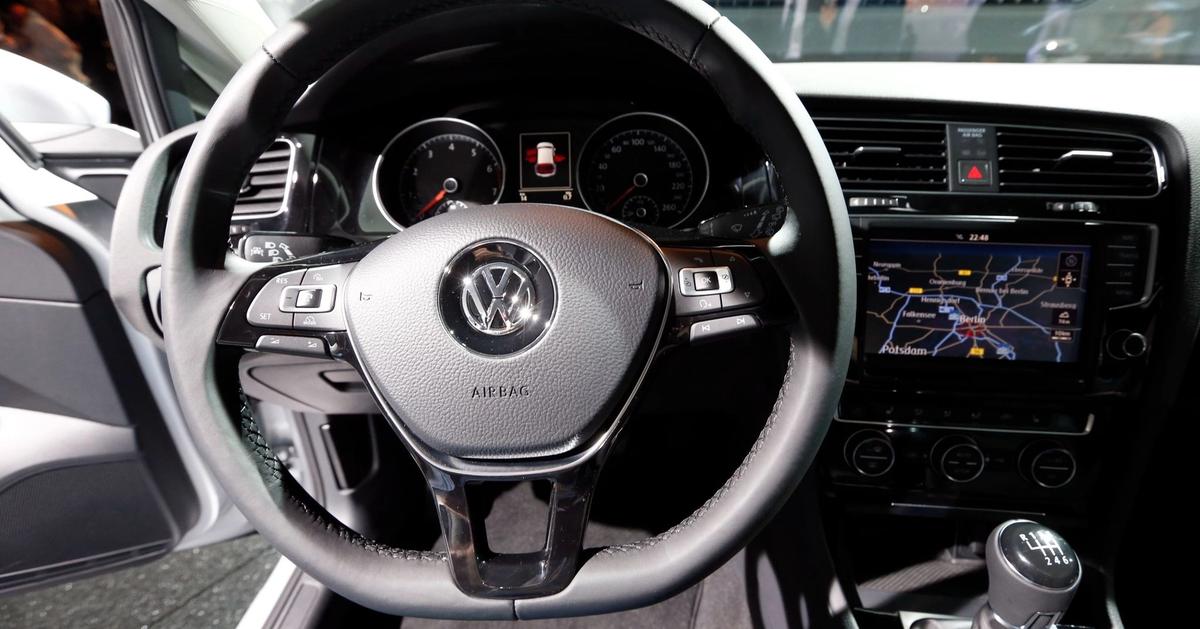
Volkswagen will restore physical buttons to the dashboard in its latest compact car, part of a wider move away from touchscreens.
In a particularly retro touch, the new ID Polo will even have a volume dial.
For a decade or so, automakers rushed to replace knobs and switches with screens, Autoblog noted in October, but users largely disliked them: Controlling the air conditioning, for example, required delving through submenus while driving, which was both difficult and dangerous. Research found that using touchscreens took longer and distracted drivers.
Hyundai, Mercedes-Benz, Porsche, and VW have all announced plans to return to more tactile controls, and US and EU regulators announced last year that cars with touchscreen controls could get worse safety ratings.
No, this is a feature that cuts the engine off when you’re at a stop. Then the engine re-starts when you try to accelerate again. Or if the AC needs to kick on. Or if the car needs literally anything. It’s jarring, and it’s little more than a gimmick that manufacturers used to improve gas mileage in testing.
I’ve yet to find any testing that would indicate it doesn’t work, only few where the effect has been quite small.
But even the tiniest effects become massive when multiplied by the amount of vehicles on the road. Like how turning your headlights off and using LED DRLs reduces fuel consumption by roughly 1-3%, which is quite a lot less pollution once you multiply that by the 250 million cars zooming around the EU and so on.
Stop-and-start systems usually result in a reduction of emissions somewhere between 3-10% in city traffic. That’s huge.
But because most people find it a tiny bit irritating, you are required the massive effort of pressing a button to turn it off every time. Most quickly realize it’s not all that irritating, because having to press a button to turn it off is actually more irritating, and so it stays enabled for a few hundred million cars reducing emissions.
I disagree. I like a car that does what I tell it to do. On older cars, when I press the accelerator they accelerate. On cars with stop-start (and mine does), when I press the accelerator it starts the engine, then accelerates.
And it’s not like it reliably turns the engine off anyway. Sometimes it does, sometimes it doesn’t. If i so much as touch the sterring wheel it restarts the engine. If a pigeon sneezes nearby the same…
And lastly, it will wear out your battery slightly quicker according to the guy who replaced the battery that died on my car.
And you know, reduce unnecessary emissions
OK that’s very different from start/stopping the car, which is an actual function of modern cars. He should have specified he was talking about the engine.