

cross-posted from: https://sopuli.xyz/post/45694113
Not that CNN is a good source, the reason I posted the CNN link is because it is indicative that CNN is concluding this publicly and emphatically. It shows the calculus of US mainstream media is changing towards Ukraine, which is not something it has really done for quite awhile.
I’m not an expert but from my understanding the soviet’s tactics were quite a bit different from Ukraines.
The soviet’s continuously threw away lives to stop the German advance. Constant attacks tossing way soldiers lives but slowly degrading the German supplies and manpower. The Soviet’s also lost most of their industry early on in the war. Most of it was located in regions that Germany conquered quickly or their airpower wrecked in the early months of the war.
The only reason they were able to stop the German advance at all was because of the massive amount of goods and weapons supplied by England and the U.S.
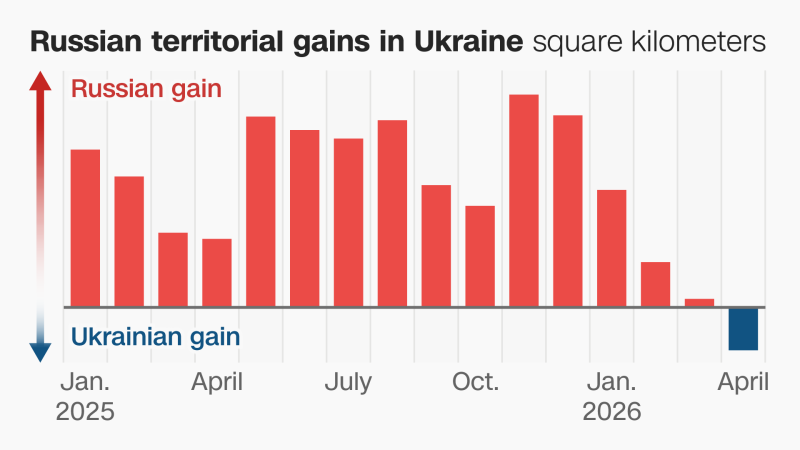
Ukraine has set up heavily defended kill zones with multi-layered defenses. Russia’s continuous attacks are chewed up in theses zones. Eventually Russia degrades the defenses enough that Ukraine retreats to the next prepared zone and starts over fresh. Ukraine has slowly lost ground but Russias entire Soviet era stockpiles have been decimated with these tactics.
So, first off, we have to be clear about whether we’re talking about tactics or strategy. Those are very different things. I’m describing strategy. We’ll come back to that later. But when it comes to every layer of warfare, there’s been a lot of Western myth-making about Soviet doctrine that doesn’t really hold up to reality.
The beloved popular image is the “Human wave tactics”, massed assaults where the Soviets senselessly and moronically launched huge waves of soldiers at heavily defended enemy positions in the vague hope that they would somehow eventually prevail.
I mean, obviously, that would be stupid right? Who would ever send a mass of troops and armour to assault a heavily defended enemy position?
Oops, how did that picture of D-Day get in here? Huh, can’t imagine how that’s relevant.
And no, I’m not criticizing the choices made on D-Day; I’m pointing out that a lot of what the West later recharacterized as a senseless waste of life on the Soviets part was just… well… warfare. The other belligerents engaged in plenty of their own massed assaults. It’s not a uniquely Soviet tactic.
Now that’s not to say that’s no truth to the idea that the Soviets were willing to trade lives at a higher rate than other nations. The notion that the USSR could use it’s vast manpower pool as a military resource was certainly present in the minds of Soviet generals, and some were known to be quite careless about their soldiers lives. But the popular image of troops being sent in mass waves without enough guns and ammo, a la Enemy At The Gates is basically a Hollywood invention.
Where Soviet battle doctrine most strongly diverged from their Western partners was in the question of attrition vs destruction. The West preferred a slow, grinding war, gradually beating down their enemies defenses. This avoided some of the more costly assaults that the Soviets were happy to engage in, but it also drew out the fighting. Warfare claims lives all the time, from sickness, cold, heat, hunger, accidents, endless skirmishes, bombardments, etc… The reality is that when you keep a mass of millions of troops on a frontline, every day will bring new deaths. When on the offensive, the Soviet calculation was that a faster victory at the cost of lives up front was preferable to a slow and grinding battle that is claiming lives constantly. While they weren’t necessarily right about this, it was a decision that came from a genuine intent to win in the least costly way, not simply a callous disregard for casualties.
I’m not going to claim that any of this comes from a place of deep compassion. Stalin certainly had little care for the lives of individual soldiers. Not One Step Back was a real thing, and his own pride almost certainly played a part in the refusal to give up Stalingrad (it was, IMO, the right call either way - the Germans desperately needed the Ukrainian oil fields and Stalingrad was the best place to stop them - but a right call can still be made for the wrong reasons). But at the same time there was no point in squandering their labour force senselessly. Every dead soldier is a man who can’t work in a factory or a field after the war is over. Those lives are valuable, one way or the other.
There is one other nugget of truth in the Western popular image of Soviet warfare, which is that generally Soviet tactics - a term that more or less refers to the section to company level of warfare - were relatively unsophisticated. That doesn’t mean they were stupid, just simple. The Soviets were mobilizing a LOT of people very fast, and like every country in the world they were trying to adapt to a very rapidly changing state of warfare. They squared this circle by favouring simplicity at the squad level. Don’t try to expect a guy from Siberia with zero education to memorize a tonne of shit, just give him clear and simple instructions about what to do when you make enemy contact. But while their tactics were simple, their operational and strategic thinking was much more advanced.
At the strategic level, which is really what my comments were about, the Soviets very smartly traded land for time in exactly the same way that Ukraine has. They knew that the Germans favoured speed and manuever, hyping themselves up on the myth of “blitzkrieg” (a propaganda term for “Truck, tank and amphetamines make army move fast”), so they allowed and encouraged the Germans to massively overstretch their own supply lines. As the Soviets retreated they sabotaged roads and railways, leaving the Germans with no way to maintain their own logistics. With stretched, inadequate supply lines (combined with the crippling lack of fuel that was a major factor in the decision to invade in the first place) the Germans struggled to maintain operational tempo as they increasingly found themselves floundering against the depth of Soviet defences. People love to talk about how General Winter saved the Soviets, but it wasn’t actually winter, it was the fact that the Germans couldn’t supply the food, fuel and equipment that their troops needed to survive winter. This, in combination with the fact that Germany deeply underestimated the depth of the Soviet’s reserve defences, lead to their lightning advance rapidly bogging down into an endless slog. This wasn’t luck, it was planning and forethought.
As a quick aside, the Soviets actually lost less of their industry than they should have, because they engaged in a massive program of evacuation, in which 1500 entire factories (along with 16 million civilians) were packed up and moved to the West of the Urals, out of range of German bombers. By the end of the war the Soviets were producing as many tanks as the United States, despite the latter having the advantages of a more advanced industrial base and not even being remotely under threat of invasion. Anyway, not actually super-relevant, I just think it’s neat. Once again, planning and forethought.
Both are variations on a theme, and that theme is called Defence in depth
The Soviet term for this was glubokaya operatsiya or “deep operation”, which is more commonly anglicised as “deep battle doctrine.” But yes, you’re absolutely correct that it’s a variation on defence in depth.