

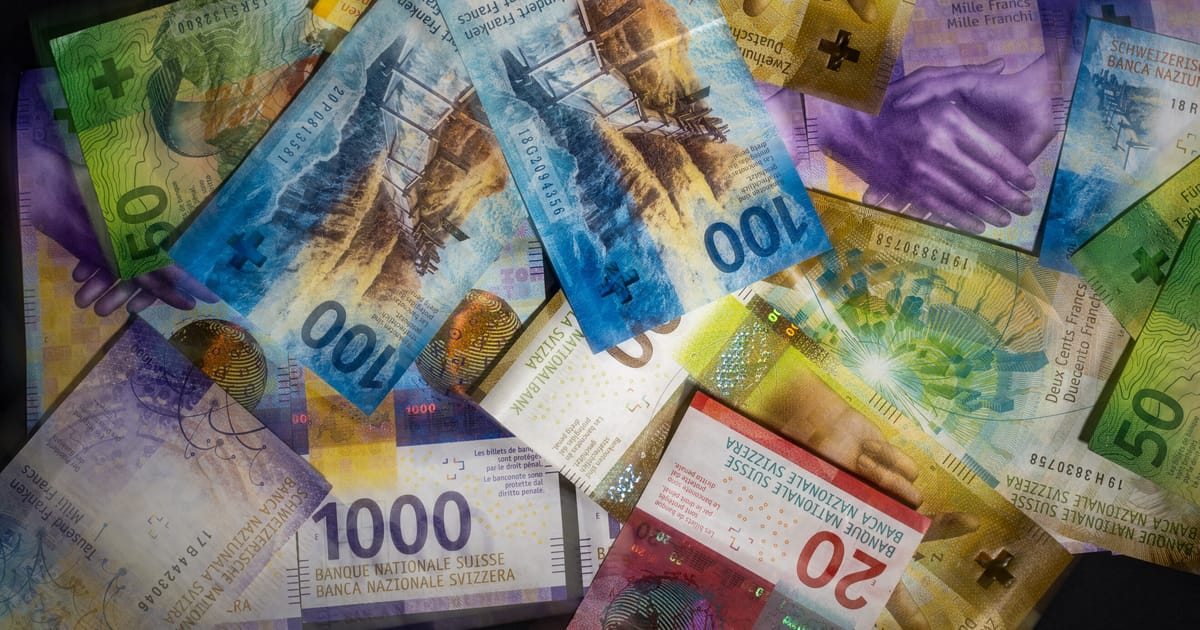
The right to use Swiss franc banknotes and coins will be enshrined in Switzerland’s constitution after voters on Sunday backed a measure designed to safeguard the use of cash in society.

  • 001Guy001@sh.itjust.works
    link
    fedilink
    English
    arrow-up
    3
    ·
    1 day ago

    I think that deciding on political/social issues should be preceded by a lengthy public discussion where experts and non-experts alike get to share all relevant information/viewpoints and ask questions to try and figure out the best way (or ways) to tackle the issue(s)

    Adding a quote from the book “From What Is to What If” by Rob Hopkins:

    While I was writing this book, my country has been enmeshed in the appalling contortions of Brexit, its withdrawal from the European Union. Brexit has been a disaster. Not because of the decision or its implications – I am not setting out in this book to express an opinion on that. The disaster was the process. The Brexit referendum took a highly complex issue, which most people didn’t really understand, and reduced it to a binary Yes or No. It was prey to massive amounts of misinformation and political interference, ‘dark money’ which influenced the vote, leaving a legacy of families and neighbours who don’t speak to one another, and a younger generation feeling betrayed by the older one. Did it have to be like that?
    Neither campaign, Remain nor Leave, engaged the imagination in making their case. All we got were dry arguments about how much money we’d lose or save, and big red buses with fictitious numbers on how much the United Kingdom would be able to reinvest in its National Health Service if it left the EU painted on the side. No one argued for the brilliant creative flourishing that leaving the EU could bring about, a cultural renaissance, the chance to create vibrant local economies and opportunity for reconnection. Conversely, very few people argued that we should stay in the EU because being connected to Europe brings untold cultural delights, means we are working together for a common goal of unity, solidarity and peace and a flourishing of the arts. No, it was all about how many millions of pounds we might save, or are unnecessarily spending, and provoking a fear of immigrants.
    The resultant decision was neither a carefully considered nor a wise collective response, and the divisions it created will endure for generations. And it meant that no one could think about anything else for years – squashing imaginative what-if questions about what kind of future we might actually want to embrace. But how might we have done it differently? How might we have had a national exploration of such a big and important question in such a way that our imaginations were invited, enhanced and treasured?
    The answers can be found in a suite of techniques known as ‘deliberative democracy’. In essence, deliberative democracy refers to decision-making approaches that give people the opportunity to deliberate, to digest and to contemplate, in a safe context, particular issues. Ed Cox of the RSA (the Royal Society for the encouragement of Arts, Manufactures and Commerce), whose aim is ‘to enrich society through ideas and action’, suggests three principles that underpin it:
    * Debate should be informed and informative, enabling people to explore issues from a range of perspectives based on sound argument rather than personality.
    * Participants should be willing to talk and listen with civility and respect.
    * Participants should represent a range of backgrounds and perspectives across the general population.
    It covers a spectrum of approaches and tools, but central to them all is the making of considered judgements, spaces where people of different perspectives come together to deliberate in an informed and well-facilitated way.