

When the Canadian prime minister, Mark Carney, took to the podium at the World Economic Forum in Davos last week to lament how “great economic powers” were dismantling the international order, it seemed clear that he was talking about the United States. He might have been talking about China as well.
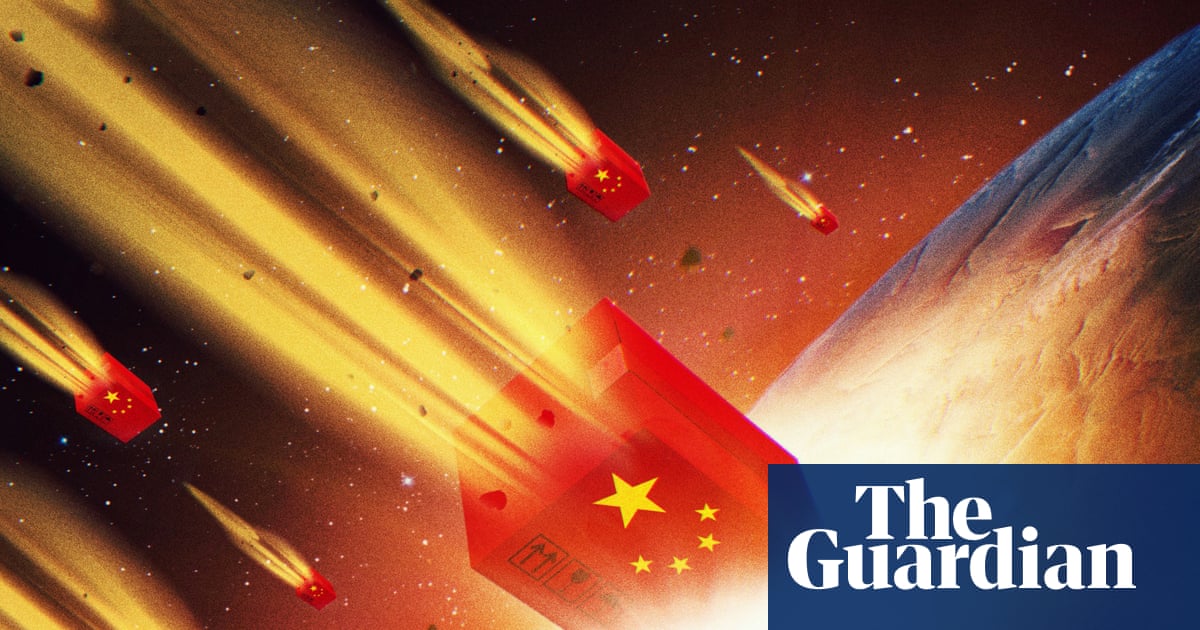
Not a week earlier, Beijing had revealed that China’s trade surplus ballooned by 20% in 2025, to $1.2tn. Despite Donald Trump’s wall of tariffs that crashed Chinese sales to the US, its overall exports expanded more than 5%. Sales to the 11 countries in Asia’s Asean bloc increased more than 13%. Exports to the European Union rose over 8%. Chinese imports, by contrast, were flat.
This gargantuan imbalance is strangling manufacturers from rich countries in Europe to poorer nations in Asia and Latin America. As Eswar Prassad, a former head of the China division at the International Monetary Fund, now at Cornell University, pointed out: “Forget Trump’s Tariffs. The Real Danger Lies in China’s Trade Surplus.”
Many factors contributed to the implosion of American governance. But Trump’s rise was largely propelled by a sense of grievance against a world order that, Americans believed, had taken the US for a ride.
America’s pain was largely self-inflicted. Manufacturing’s footprint shrunk in Germany over the last quarter century, like it did in the US. It shrunk in the UK and France, Italy and Japan. While those shifts have caused domestic political disruptions, in none of these other countries did voters try to punish the rest of the world for the loss, as Trump has.
If the decision was that simple, it would be obvious. But it’s not. Lots of countries don’t have the capability to manufacture those products they import.
Why do they not simply build it, you ask? Because that takes a lot of time, money, knowledge, coordination, and motivation. A developing nation with low capabilities and high corruption is never going to be able to compete with China. You can give them a bunch of money, but if it just goes into people’s pockets, it doesn’t build a factory. If you build a factory, you need people willing and able to operate it, not to mention you need stable utilities and raw material input.
Why would I invest in building a factory when I can just import the same thing from China right now for mere dollars?
The Chinese government owns about 50% of the manufacturing industry in china. It’s difficult but entirely possible if the governing power truly wants to. Need only look over at Africa.